
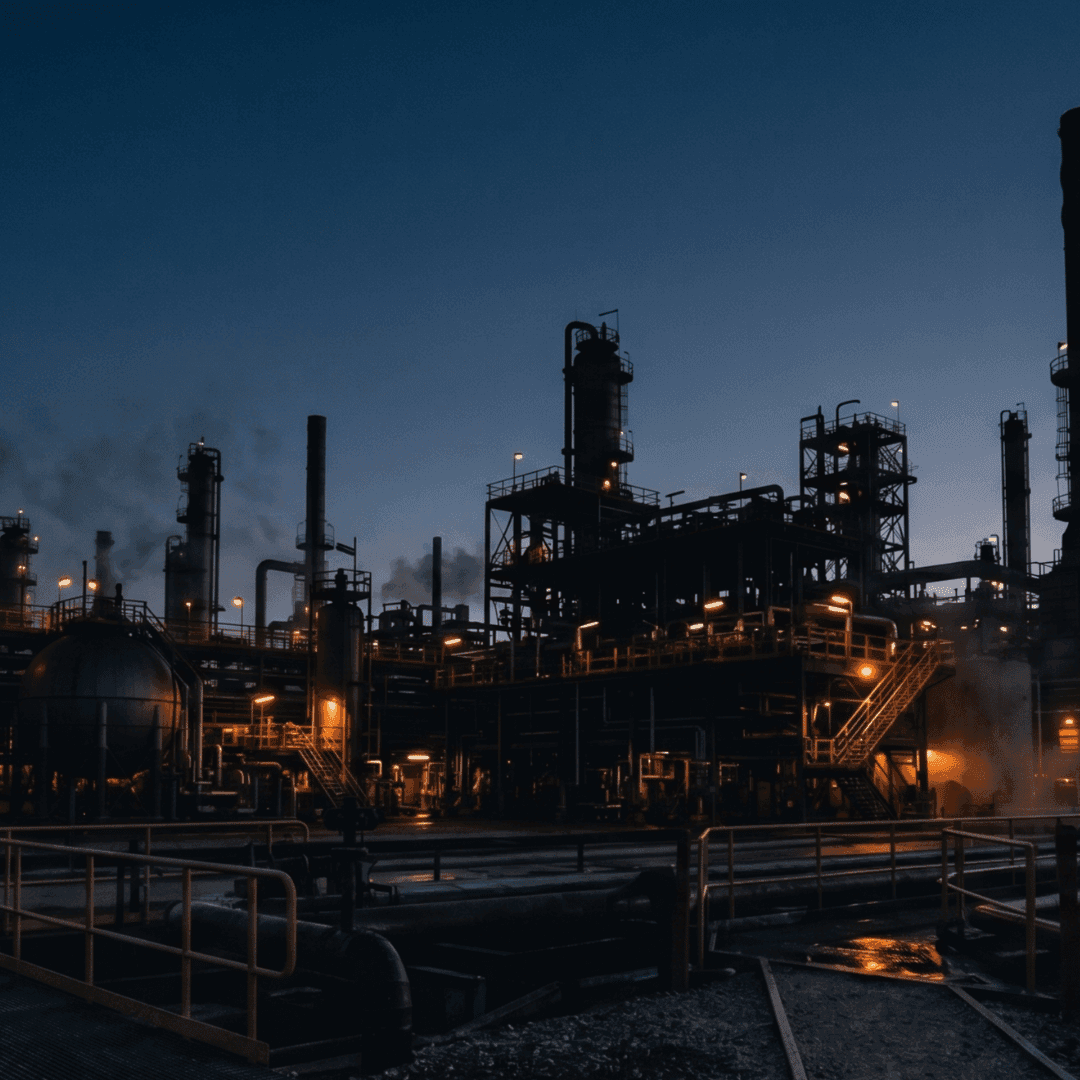
Chemical Spill Injuries in West Virginia: Workplace Safety Violations and Your Legal RightsWhen Safety Fails: Chemical Spill Injuries and Workplace Violations in West Virginia
If you were injured in a chemical spill, leak, or release at a West Virginia workplace, West Virginia law generally requires you to pursue workers' compensation as your primary remedy. But two important exceptions can open the door to a full civil lawsuit with far greater recovery: (1) the deliberate intent exception under W. Va. Code § 23-4-2(d)(2), which applies when your employer knowingly exposed you to a specific unsafe condition that violated a safety standard; and (2) third-party liability, when a company other than your direct employer — a chemical manufacturer, equipment maker, contractor, or plant owner — contributed to the incident. OSHA citations issued after the incident can become powerful evidence in either track.


Chemical Spill Injuries in West Virginia: Workplace Safety Violations and Your Legal Rights
Short answer: If you were injured in a chemical spill, leak, or release at a West Virginia workplace, West Virginia law generally requires you to pursue workers' compensation as your primary remedy. But two important exceptions can open the door to a full civil lawsuit with far greater recovery: (1) the deliberate intent exception under W. Va. Code § 23-4-2(d)(2), which applies when your employer knowingly exposed you to a specific unsafe condition that violated a safety standard; and (2) third-party liability, when a company other than your direct employer — a chemical manufacturer, equipment maker, contractor, or plant owner — contributed to the incident. OSHA citations issued after the incident can become powerful evidence in either track.
Why West Virginia Workers Face Elevated Chemical Spill Risk
The Kanawha Valley has been called "Chemical Valley" for generations, and for good reason. From the Freedom Industries MCHM leak in January 2014 — which cut off drinking water for roughly 300,000 residents — to the December 2020 Optima Belle explosion at the Chemours site that killed one worker and injured three more, to the May 11, 2025 fatal waterline explosion at Westlake Chemical's Proctor facility in Marshall County, West Virginia has seen a steady cadence of serious industrial chemical incidents.
The risk is not limited to large manufacturers. Coal-washing chemicals, oilfield fluids, chlor-alkali production, specialty chemicals, and waste handling all create exposure pathways for workers across the state — in Huntington, Charleston, Nitro, Institute, Belle, New Martinsville, Proctor, and beyond.
When those incidents happen, OSHA usually investigates. And OSHA's findings often tell a familiar story: the safety failures were known, documented, and preventable.
The Most Common OSHA Violations Behind West Virginia Chemical Spills
OSHA has jurisdiction over private-sector workplace safety in West Virginia (the state does not operate its own OSHA-approved state plan for private employers). In the chemical-spill context, the citations regulators issue after an incident tend to cluster in a predictable set of categories:
Process Safety Management (29 C.F.R. § 1910.119). The PSM standard governs facilities that handle highly hazardous chemicals above threshold quantities. Violations commonly involve failure to perform or update process hazard analyses, inadequate management of change procedures, outdated operating procedures, and missing mechanical integrity inspections on piping, vessels, and relief systems. Westlake's Proctor facility has a documented history of PSM-related citations.
Hazard Communication (29 C.F.R. § 1910.1200). This is the duty to tell workers what they are handling. Citations involve missing or incorrect Safety Data Sheets, unlabeled containers, and inadequate training on chemical hazards. After the Axiall/Eagle Natrium chlorine leak in New Martinsville in 2016, OSHA cited the facility for — among other things — failing to properly communicate hazards to employees.
Control of Hazardous Energy – Lockout/Tagout (29 C.F.R. § 1910.147). Pressurized lines, steam systems, and chemical piping must be fully de-energized and verified before maintenance. LOTO failures are a leading cause of pressurized-system fatalities at chemical plants.
Respiratory Protection (29 C.F.R. § 1910.134). Inadequate fit-testing, the wrong cartridge for the hazard, or no respirator at all when one is required.
Personal Protective Equipment (29 C.F.R. § 1910.132). Failing to provide, require, or replace appropriate chemical-resistant PPE. Westlake's Proctor facility was cited in 2022 for PPE failures.
Emergency Response (29 C.F.R. § 1910.120). HAZWOPER training, spill response plans, and emergency action plans must actually exist, be current, and be drilled.
Secondary Containment and Storage. After the 2014 Elk River spill, OSHA fined Freedom Industries for storing MCHM behind a diked wall that was not liquid-tight and for missing fall protection on an elevated platform — both classified as "serious" violations.
Each of these standards exists for a reason: workers have died when they were not followed. And each of them can support the "violation of a safety standard" element of a deliberate intent claim.
Three Legal Tracks After a West Virginia Chemical Spill Injury
1. Workers' Compensation — The Default Remedy
Under West Virginia's workers' compensation system, most employees injured on the job are entitled to no-fault benefits covering medical treatment and a portion of lost wages regardless of who caused the incident. In exchange, the employer is generally immune from tort suits by the injured worker. This is known as the "exclusive remedy" doctrine. Deadlines are short — claims generally must be filed within six months of the injury.
Workers' comp is a floor, not a ceiling. It covers medical bills and wage replacement, but it does not provide compensation for pain and suffering, full lost wages, loss of life's enjoyment, or punitive damages. For a worker with serious chemical burns, permanent lung damage, or the family of a worker killed in an explosion, workers' comp alone rarely makes them whole.
2. The Deliberate Intent Exception — W. Va. Code § 23-4-2(d)(2)
West Virginia is one of only a handful of states that allows injured workers to sue their own employer outside the workers' comp system when specific, egregious conditions are met. The statute creates two paths:
Path A — Specific Intent (§ 23-4-2(d)(2)(A)). The employer formed a conscious, subjective, and deliberate intention to cause the specific injury or death. This is nearly impossible to prove in practice and is rarely used.
Path B — The Five-Factor Test (§ 23-4-2(d)(2)(B)). This is the path most deliberate intent cases travel. A plaintiff must prove all five of the following:
- A specific unsafe working condition existed that presented a high degree of risk and a strong probability of serious injury or death;
- The employer had actual knowledge of that specific unsafe working condition and of the high degree of risk;
- The unsafe condition violated a state or federal safety statute, rule, or regulation, or a commonly accepted and well-known safety standard within the industry;
- The employer nonetheless intentionally exposed the employee to the unsafe condition; and
- The employee was, in fact, seriously injured or killed as a proximate result.
The 2015 amendments to the statute — and additional 2023 amendments — tightened every element. "Actual knowledge" cannot be presumed or shown by what supervisors should have known; it must be proven by direct evidence, often including documentary records of prior accidents, near-misses, safety complaints, or regulatory citations. Claims brought under the five-factor test must also include a certificate of merit from a qualified workplace safety expert, filed with the complaint.
For chemical spill cases, the evidentiary value of OSHA's post-incident inspection file is hard to overstate. Prior citations for the same or similar violations, internal safety audits, PSM compliance reports, and near-miss logs frequently supply the "actual knowledge" proof the statute demands.
A recent change worth knowing. House Bill 3270, which took effect for causes of action accruing on or after July 1, 2023, created W. Va. Code § 23-4-2a and capped noneconomic damages in deliberate intent cases at the higher of two times economic damages (before the workers' comp offset) or $500,000 per claimant, regardless of the number of plaintiffs or defendants. Punitive damages are not available on five-factor claims. Economic damages — medical bills, lost earnings, future lost earning capacity — remain uncapped.
3. Third-Party Liability
Workers' comp immunity protects your employer. It does not protect other companies whose negligence contributed to the incident. In a chemical spill case, potential third-party defendants include:
- The manufacturer of a defective valve, pressure relief device, tank, hose, or PPE item;
- The chemical manufacturer that failed to adequately warn of its product's hazards;
- An engineering firm that designed a process or containment system;
- A contractor or subcontractor working on the site whose employee caused the release;
- The property owner or plant operator, when the injured worker was employed by a different contractor;
- A maintenance or inspection company that certified equipment as safe.
Third-party claims are ordinary negligence, product liability, or wrongful death actions. They are not subject to the deliberate intent statute's heightened proof requirements or the $500,000 noneconomic damages cap. Pain-and-suffering damages are available under the general caps that apply to West Virginia tort cases, and punitive damages remain on the table where the facts support them.
In many West Virginia industrial incidents, a worker can pursue workers' comp benefits and a deliberate intent claim against the employer and one or more third-party claims simultaneously. Coordinating those tracks — and addressing the workers' comp subrogation lien that will attach to any third-party recovery — requires careful planning from the start.
What Damages Can You Recover?
The short answer depends on which track or tracks are available:
- Workers' compensation: medical expenses, a percentage of lost wages (temporary total, temporary partial, or permanent disability benefits), and survivor benefits in fatal cases.
- Deliberate intent: all workers' comp benefits plus the excess over those benefits, including full wage loss, loss of earning capacity, medical care not covered by comp, and noneconomic damages up to the § 23-4-2a cap.
- Third-party tort claims: the full range of compensatory damages — medical, lost earnings, pain and suffering, loss of enjoyment, loss of consortium, and potentially punitive damages — subject only to West Virginia's general tort caps.
Critical Deadlines
Deadlines in chemical-spill cases are unforgiving, and more than one clock is usually running at the same time:
- Workers' compensation claim: generally six months from the date of injury.
- Deliberate intent lawsuit: two years from the injury date under the personal injury statute of limitations, W. Va. Code § 55-2-12.
- Wrongful death action (fatal cases): two years from the date of death under W. Va. Code § 55-7-6.
- Third-party product liability or negligence claims: generally two years, though the discovery rule can extend the period in occupational-disease cases where the injury develops over time.
- OSHA whistleblower retaliation complaint (if you were fired or disciplined for reporting the spill): 30 days under Section 11(c) of the OSH Act.
Evidence disappears fast after a chemical incident. Spill sites get cleaned up. Equipment gets repaired or replaced. Witness memories fade. The OSHA inspection file is usually complete within six months, but you may need to move sooner to preserve physical evidence before the plant resumes normal operations.
What to Do If You Are Injured in a West Virginia Chemical Spill
- Get medical care immediately and tell providers what you were exposed to. Ask for copies of the Safety Data Sheet for every chemical involved. Chemical exposures often produce delayed symptoms — document everything from day one.
- Report the injury to your employer in writing. West Virginia workers' comp requires prompt notice. Keep a copy.
- Photograph everything you can. Your clothing, the scene (if safely accessible), equipment, warning signs or the lack thereof, and any visible damage.
- Identify witnesses. Get names and contact information for coworkers who saw the incident or who know about prior problems with the same equipment or process.
- Preserve your own records. Pay stubs, training records, safety complaints you filed, emails, text messages, and any internal safety bulletins.
- Do not give a recorded statement to the employer's insurance carrier before consulting with a lawyer. What you say can be used to defeat a deliberate intent claim later.
- Request the OSHA file. You or your attorney can submit a FOIA request to OSHA for the inspection report, citations, and supporting documents after the investigation closes.
- Talk to a lawyer who handles West Virginia workplace injury and deliberate intent cases. The analysis of which tracks to pursue, in what sequence, is not something to work out on your own.
Frequently Asked Questions
Can I sue my employer after a chemical spill in West Virginia? In most cases, no — workers' compensation is the exclusive remedy against your employer. The exception is the deliberate intent statute, W. Va. Code § 23-4-2(d)(2), which permits a civil suit when the employer knowingly exposed you to a specific unsafe condition that violated a safety standard. You can almost always sue third parties whose negligence contributed to the incident.
Is West Virginia a federal OSHA state? Yes, for private-sector employers. West Virginia does not operate an OSHA-approved state plan covering private industry, so federal OSHA (U.S. Department of Labor) handles inspections, citations, and enforcement at private chemical facilities.
How long do I have to file a workers' compensation claim in West Virginia? Generally six months from the date of injury. For occupational diseases from chemical exposure, the clock runs from when you knew or should have known the condition was work-related.
What is the $500,000 cap on deliberate intent damages? Under W. Va. Code § 23-4-2a, enacted in 2023, noneconomic damages (pain and suffering, loss of enjoyment) in deliberate intent cases are capped at the higher of two times economic damages or $500,000 per claimant, regardless of the number of plaintiffs or defendants. This applies to causes of action accruing on or after July 1, 2023. Economic damages — medical bills, lost wages, lost earning capacity — are not capped.
Does the cap apply to third-party lawsuits? No. The § 23-4-2a cap applies only to deliberate intent actions against the employer. Product liability and negligence claims against third parties — equipment manufacturers, chemical suppliers, contractors — are not subject to it.
Can my family sue if I was killed in a chemical plant explosion? Yes. Wrongful death claims can be brought under deliberate intent (against the employer, subject to the cap and five-factor proof) and under W. Va. Code § 55-7-6 against any negligent third party.
What if OSHA cited my employer after the incident? OSHA citations are not automatically admissible as proof of negligence, but the underlying facts, inspection findings, photographs, witness statements, and documents in the file are often powerful evidence. Prior citations for similar violations can be particularly valuable in establishing the "actual knowledge" element of a deliberate intent claim.
What if the spill happened in Ohio, not West Virginia? Ohio also has an "intentional tort" exception to workers' comp exclusivity, but it is codified differently at Ohio Revised Code § 2745.01 and has its own heightened proof requirements. The analysis depends on where the spill occurred and where you were working. Our firm is licensed in both West Virginia and Ohio and handles industrial injury cases in state and federal courts on both sides of the river.
The Bottom Line
A chemical spill at a West Virginia workplace is rarely a simple "accident." Most happen because a specific, identifiable safety standard was not followed — and, more often than not, because someone at the company knew about the risk and accepted it. West Virginia law gives seriously injured workers and the families of workers killed in these incidents more options than many realize. But the deadlines are short, the evidence is perishable, and the legal standards are specific enough that working with an attorney who handles these cases is not optional.
If you or a loved one has been hurt in a chemical spill, leak, or release at a West Virginia workplace, Haslam Law Firm handles industrial injury cases across West Virginia and Ohio. Consultations are confidential and free.
Haslam Law Firm LLC | Huntington, West Virginia | (Contact information)
No Cost. No Pressure.
Get a Free Evaluation
Find out where your case stands with a free, no-obligation
evaluation from our legal team.

 750+
750+Clients Represented